Merzouga is where most travellers meet the Sahara for the first time: a small village at the foot of Erg Chebbi, a sea of orange dunes rising up to around 150 metres. Getting there is part of the adventure, because Merzouga lies far from Morocco’s big cities. This guide explains how to get to Merzouga from Fes, Marrakech and the nearest airports, how long it takes and how to turn the long drive into a highlight.
Where is Merzouga?
Merzouga is a village in south-eastern Morocco, in the Drâa-Tafilalet region, close to the Algerian border. It sits on the western edge of Erg Chebbi, the most famous dune field in Morocco. The nearest towns are Rissani (about 35–40 km) and Erfoud (about 50–60 km). Merzouga is the base for camel treks, nights in desert camps and visits to nomad families.
How to get to Merzouga: options at a glance
| From | Approx. distance | Approx. drive time | Best way |
|---|---|---|---|
| Fes | ~470 km | 7.5–8.5 h | Private driver via Ifrane and Midelt, or bus |
| Marrakech | ~550 km | 9–10 h | Over 2–3 days via Aït Ben Haddou and the gorges |
| Errachidia (airport) | ~130 km | ~2 h | Taxi or pre-booked transfer |
| Ouarzazate (airport) | ~370 km | ~6 h | Private driver via Dades and Todra |
Distances and times are approximate and exclude stops.
From Fes to Merzouga
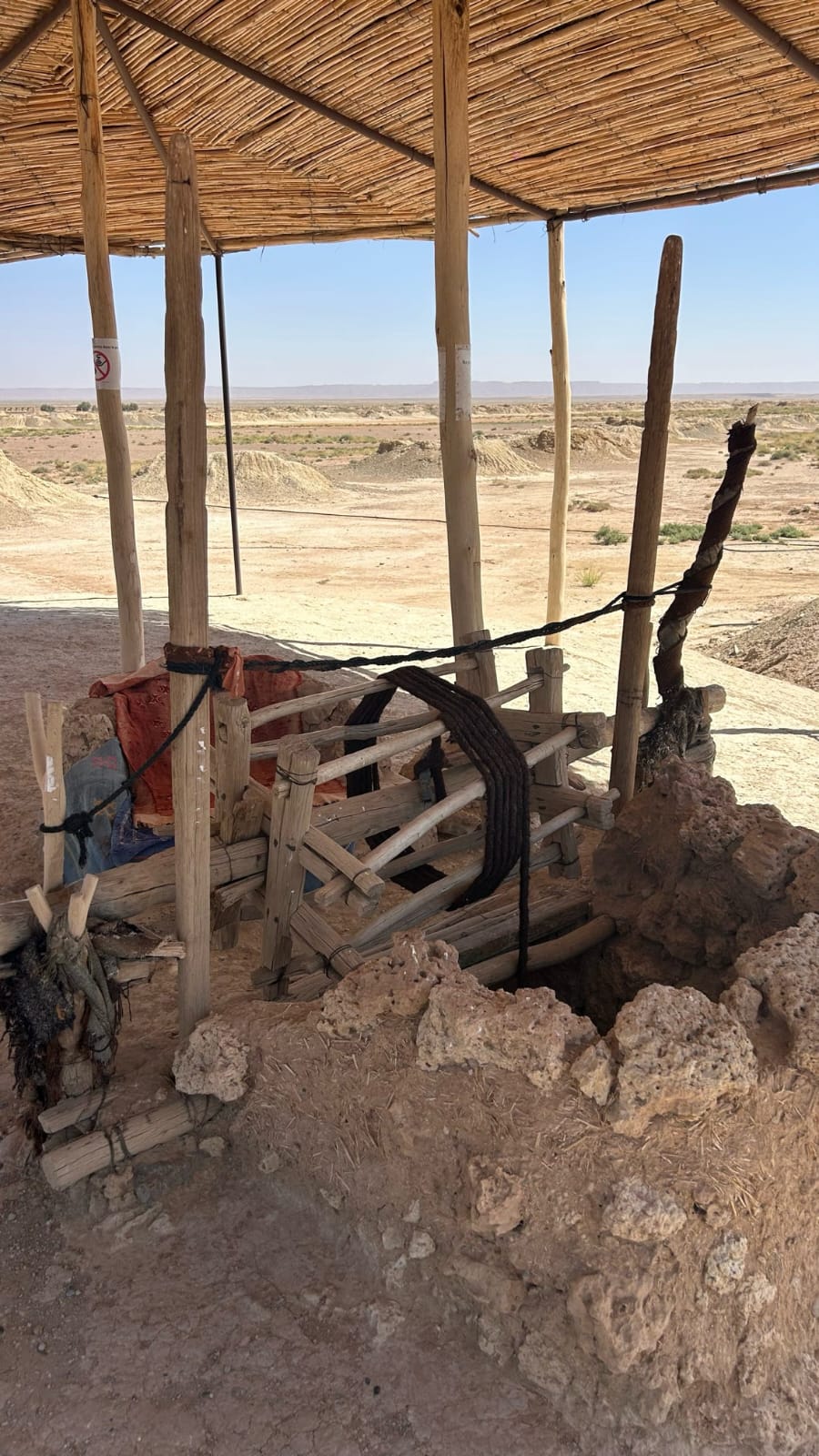
The route from Fes is the most direct way to reach the Sahara from northern Morocco. It climbs into the Middle Atlas to Ifrane, crosses cedar forests near Azrou, where Barbary macaques can sometimes be seen, then descends to Midelt and follows the spectacular Ziz valley through Errachidia and Erfoud. Many travellers split the trip with a night in Midelt, as on our 13-day Imperial Cities, Sahara and Atlas tour, which stops in Midelt for tea with a local family before reaching the dunes the next day via Erfoud’s fossil workshops and the market town of Rissani.
From Marrakech to Merzouga
Marrakech is further away, and the road crosses the High Atlas over the Tizi n’Tichka pass (about 2,260 m). Doing it in one day is possible but exhausting. The classic approach takes two or three days:
- Day 1: Marrakech → Tizi n’Tichka → Aït Ben Haddou → Ouarzazate → Dades valley.
- Day 2: Dades → Todra Gorge → Tinghir → Erfoud → Merzouga, in time for sunset on the dunes.
- Day 3: sunrise in the desert, then onward or back via a different route.
Our 2-week Morocco itinerary shows how to place this route in a longer trip.
By bus
Supratours (linked to the national railway) and CTM run long-distance buses towards Merzouga or nearby Rissani from cities such as Fes and Marrakech, some of them overnight. Buses are cheap but long, and you then need transport from the bus stop to your camp. Check current timetables before travelling, as schedules change by season.
By plane
The closest airport is Errachidia (Moulay Ali Cherif), about two hours’ drive from Merzouga, with limited domestic flights. Ouarzazate airport is another option for combining the desert with the gorges and kasbahs. Flights save time but reduce the experience of crossing the Atlas and the valleys.
Driving yourself to Merzouga
The main roads are paved and in good condition, so self-drive is possible. Keep in mind:
- Distances between fuel stations can be long in the south; fill up in Errachidia, Erfoud or Rissani.
- Avoid driving after dark: livestock, cyclists and unlit vehicles are common.
- Do not drive onto the dunes with a standard car; camps arrange 4x4 or camel transfers.
- Police checkpoints are frequent; carry your licence, passport and rental papers.
What to do once you arrive
- Camel ride at sunset to a camp in the dunes, or a walk to the top of a high dune.
- Night in a desert camp with dinner, music around the fire and a star-filled sky.
- Sunrise from the dunes, the most magical moment of the day.
- Visit Khamlia, a village known for Gnawa music, and the market of Rissani.
- Explore by 4x4: the black desert, old mines and seasonal lake areas.
How to choose a desert camp in Merzouga
Camps around Erg Chebbi range from simple nomad-style tents to comfortable camps with private bathrooms. Before booking, consider:
- Location: camps deep in the dunes feel more remote; those near the village are easier to reach by car.
- Access: most camps are reached by camel (around 1 to 1.5 hours) or by 4x4; luggage usually goes by vehicle.
- Facilities: shared or private toilets and showers, beds or mattresses, heating in winter.
- Meals: dinner and breakfast are normally included; ask about vegetarian options.
- Environmental care: prefer camps that manage waste properly and keep the dunes clean.
What to pack for Merzouga
Bring a small overnight bag rather than your full suitcase, which can stay in the vehicle or at the hotel. Include a warm layer for the evening, a scarf or buff to protect your face from sand, sunglasses, sunscreen, a head torch and closed shoes or sandals that you do not mind filling with sand. Keep cameras and phones in a zipped bag, as fine sand gets everywhere, especially on windy days.
When is the best time to go to Merzouga?
October to April is the most pleasant period, with warm days and cool or cold nights. From late November to February, nights in the desert can drop close to freezing, so bring warm layers. Summer (June to August) is extremely hot during the day; if you travel then, plan activities for early morning and evening. Spring can bring sandstorms. More detail in our guide to the best time to visit Morocco.
Key takeaways
- Merzouga sits at the edge of Erg Chebbi in south-eastern Morocco.
- From Fes it is about 470 km (7.5–8.5 h); from Marrakech about 550 km (9–10 h).
- Splitting the journey over two or three days makes it enjoyable rather than exhausting.
- The nearest airport is Errachidia, about two hours away.
- October to April offers the most comfortable desert conditions.
Want to reach the dunes without worrying about logistics? Our cultural circuits include the Sahara: see the Imperial Cities, Sahara and Atlas tour, browse our tours or contact us to add the desert to a trek.