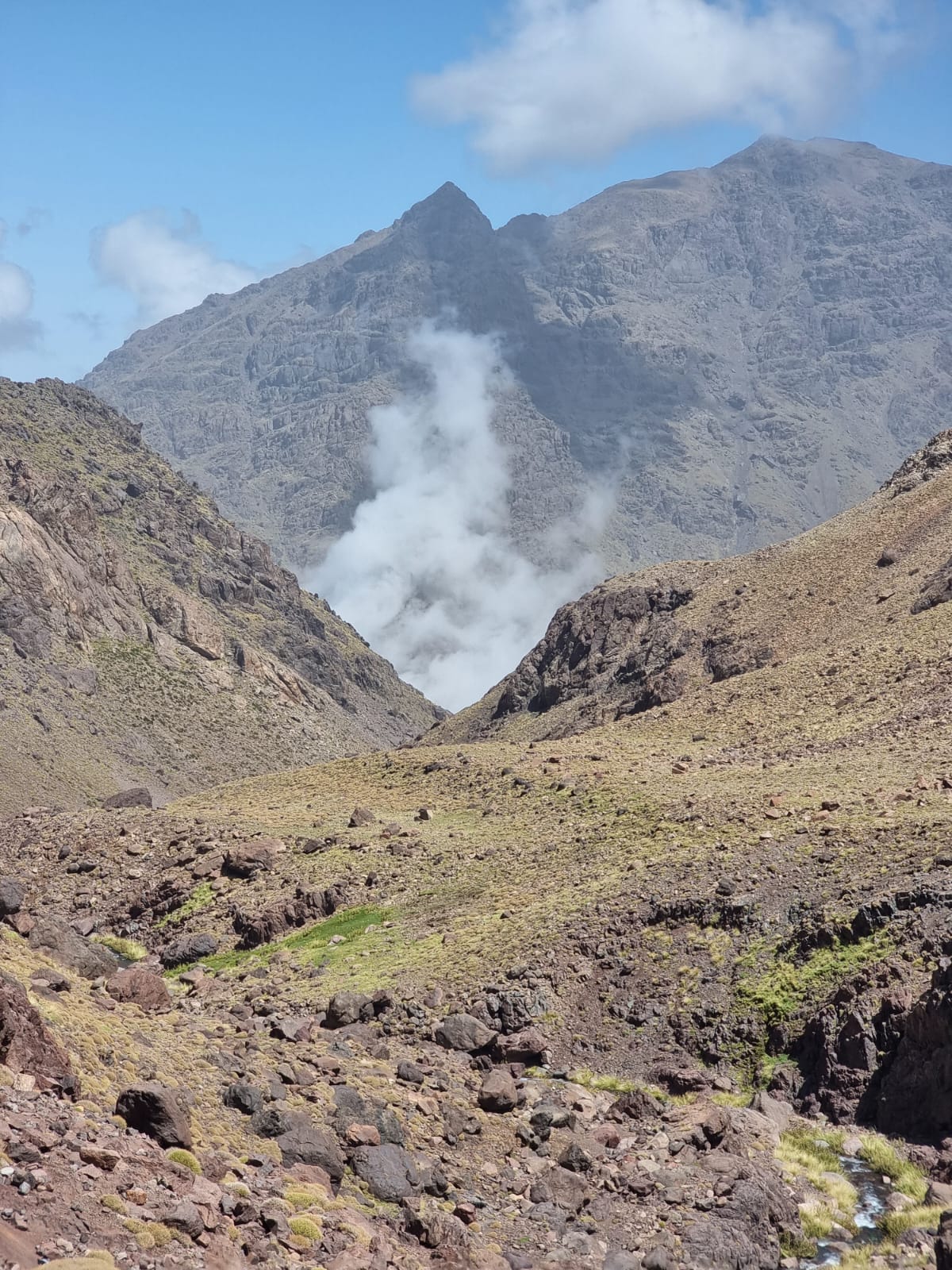
Hidden on the southern side of the Toubkal massif, Lake Ifni is one of the most rewarding places to reach on foot in Morocco. There is no road, no village on its shore and often no one else around: just deep blue water, scree slopes and a huge silence. Here is everything you need to know about Lake Ifni, Morocco, and the treks that lead there.
What is Lake Ifni?
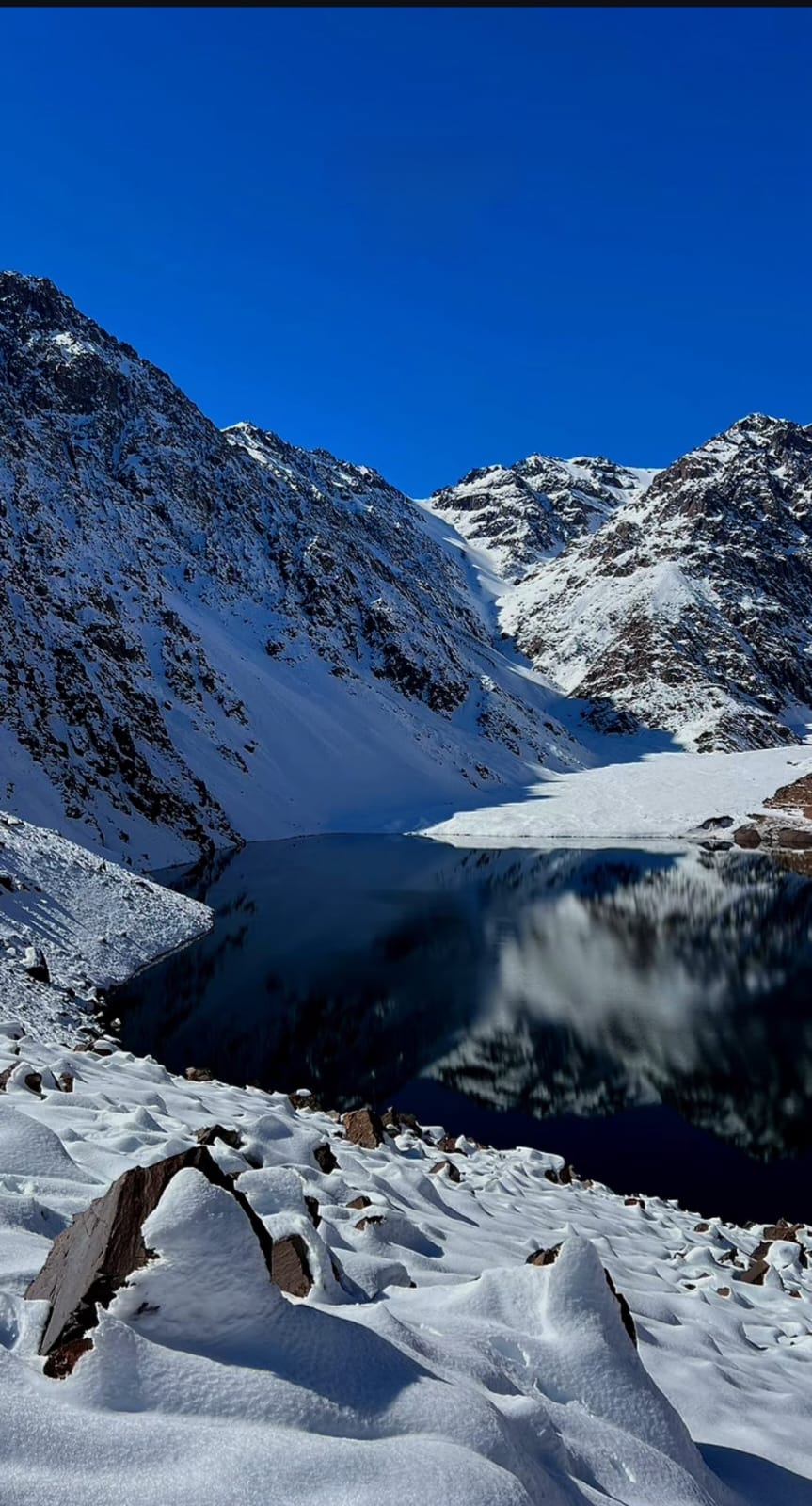
Lake Ifni (Lac d’Ifni, sometimes spelled Ifni Lake) is a natural mountain lake in the High Atlas of Morocco, at roughly 2,300 m above sea level, south-east of Mount Toubkal inside Toubkal National Park. It is usually described as the only natural lake of the High Atlas. The lake is believed to have formed when a large rock fall dammed the valley, and it is fed by snowmelt from the surrounding peaks. More background is available on Wikipedia’s Lake Ifni page.
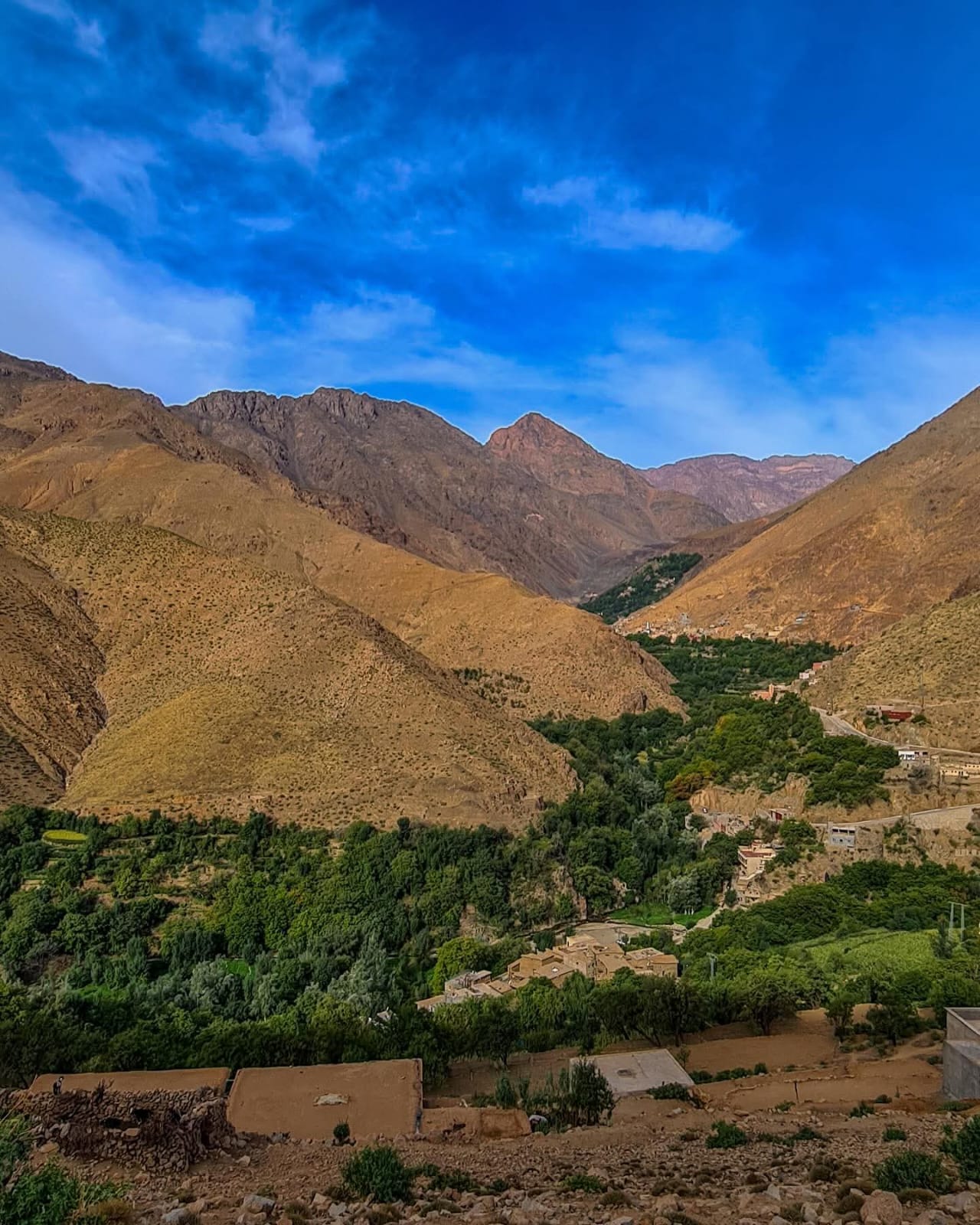
The nearest inhabited area is the Amsouzart valley, a few hours’ walk below the lake, on the southern slopes facing the Souss region.
Where is Lake Ifni and how do you get there?
Lake Ifni cannot be reached by car. There are two main approaches:
- From the north (Imlil side): walk up from Imlil to the Toubkal Refuge (about 3,207 m), then cross the high pass of Tizi Ouanoums (about 3,650 m) and descend steeply to the lake. This usually takes two days and suits fit, acclimatised hikers.
- From the south (Amsouzart side): drive from Marrakech towards the Souss side of the massif and the Amsouzart area, then hike up the valley for about 3 to 5 hours depending on your starting point. This is the gentler approach.
Most visitors combine the lake with a longer loop. Our 5-day Lake Ifni and Iferouane summit trek reaches the lake on day one from the southern side and then explores the remote eastern High Atlas, while the 6-day summer villages and Toubkal trek arrives at the lake on day four before crossing Tizi Ouanoums to the Toubkal Refuge.
Lake Ifni treks compared
| Trek | Duration | Highlights | Level |
|---|---|---|---|
| Lake Ifni out-and-back from Amsouzart | 2 days | Lake, Amsouzart villages | Easy to moderate |
| Lake Ifni & Iferouane summit | 5 days | Lake, shepherd camps, Iferouane (4,002 m) | Challenging |
| Toubkal circuit via Lake Ifni | 6 days | Tizi Likemt, lake, Toubkal summit | Moderate to strenuous |
| Imlil → Refuge → Tizi Ouanoums → Lake Ifni | 2–3 days one way | High pass, dramatic descent | Strenuous |
For a day-by-day description of the loop, see our Toubkal circuit trek guide.
What is it like to camp at Lake Ifni?
Camping beside the lake is the highlight for many trekkers. Camps are usually set on the flat ground near the shore. After a long walk, the afternoon is free for resting, reading and photography. As the sun goes down, the cliffs turn red and ochre, and on clear nights the sky is full of stars because there is no light pollution at all.
- Temperature: warm afternoons in summer, but nights can drop to 5 °C or lower; bring a warm layer and a good sleeping bag.
- Facilities: none. There is no shop, no electricity and no phone signal at the lake itself in most places.
- Water: available from streams and the lake, but always filter or treat it.
- Wildlife: birds of prey above the cliffs, and sometimes shepherds with goats on the slopes.
When is the best time to visit Lake Ifni?
The best season is late May to mid-October. In this window the high passes are generally free of snow and nights are bearable. June and September are ideal: long days, mild temperatures and fewer flies than in mid-summer. In July and August the walk up from Amsouzart can be hot, so start early. From November to April, snow may block Tizi Ouanoums and make the northern approach a winter mountaineering route.
Photography tips at Lake Ifni
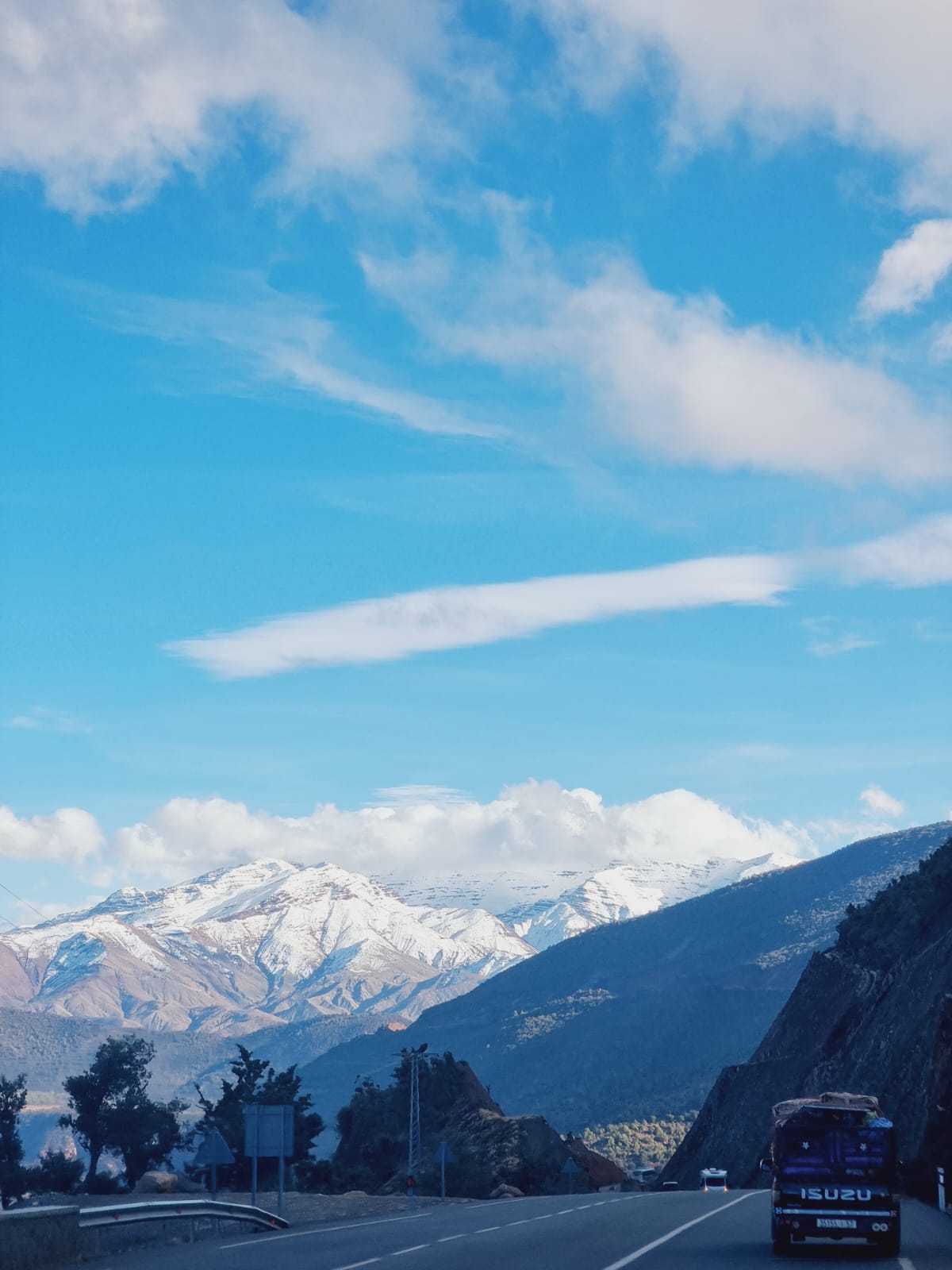
The lake changes colour through the day, from pale turquoise at noon to deep navy in the evening. The best light usually comes in the last hour before sunset, when the western cliffs glow and the water turns still. Climb a few minutes up the scree on the northern shore for a wide view that includes the whole lake and the valley beyond. At night, a small tripod and a wide lens are enough for star photography, as there is virtually no artificial light within many kilometres. Protect your batteries from the cold by keeping them in your sleeping bag overnight.
The villages around the lake
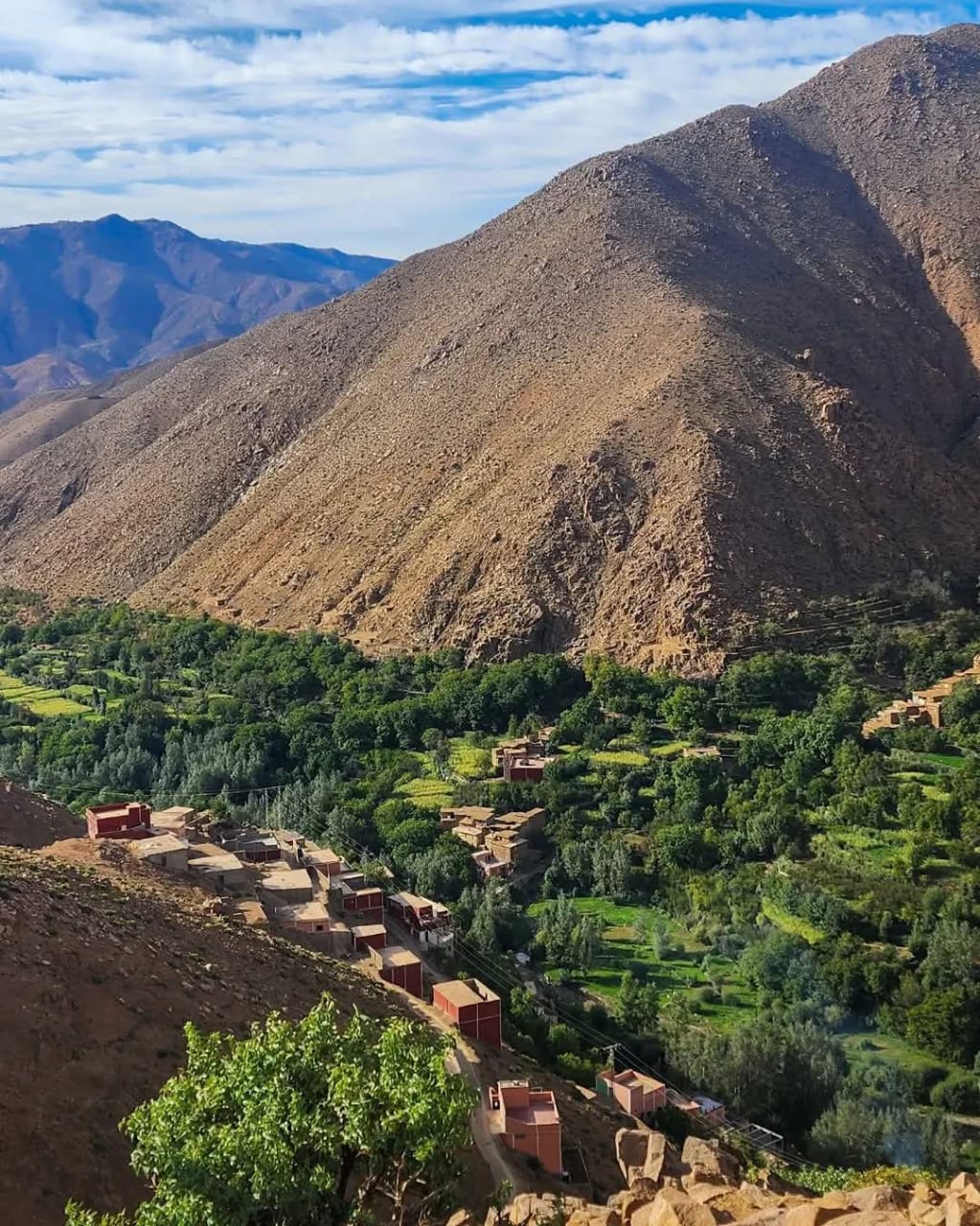
The southern valleys around Amsouzart feel very different from the busy Imlil side. Villages of earth and stone houses sit above irrigated terraces of barley, potatoes and walnuts. Higher up, seasonal shepherd camps called azibs are used in summer when families move their flocks to fresh pastures. Walking through this area gives a real sense of how Amazigh mountain communities live, and why trails here are still used daily by mules rather than hikers. Read more in our guide to Berber villages of the Atlas Mountains.
How to prepare for a Lake Ifni trek
- Choose your approach: south (gentler) or north via Tizi Ouanoums (harder, but spectacular).
- Book a licensed guide: the lake is inside Toubkal National Park and remote; a local team also handles mules, tents and meals.
- Train for long days: most stages are 5 to 7 hours with 600 to 1,200 m of ascent.
- Pack for cold nights: down jacket, hat, sleeping bag rated to about 0 °C.
- Bring cash and a power bank: there are no ATMs or charging points beyond the trailhead.
Is Lake Ifni worth it?
If you want to see the High Atlas beyond the classic Toubkal corridor, yes. Lake Ifni offers a rare combination: remote wilderness, a dramatic landscape and authentic village life on the approach. It is especially worth it for hikers who have already climbed Toubkal or who prefer quiet trails over summits. For first-time visitors, combining the lake with the Toubkal summit on a loop gives the best of both worlds.
Key takeaways
- Lake Ifni sits at about 2,300 m, south-east of Toubkal, and is reachable only on foot.
- The southern approach from Amsouzart is the easiest; the northern one crosses Tizi Ouanoums at about 3,650 m.
- Best visited from late May to mid-October.
- Usually part of a 5–6 day trek with camping by the shore.
- No facilities: you need a supported trek with a guide, cook and mules.
Our team is based in Imlil and runs treks across this part of the High Atlas. Explore our trekking tours or ask us about Lake Ifni dates.