Packing for Mount Toubkal is a balancing act. In a single trek you can go from 30 °C in the Imlil valley to sub-zero wind on a 4,167 m summit at dawn. Bring too little and summit day is miserable; bring too much and your bag becomes a burden. This Toubkal packing list, built from what our guides in Imlil see work every season, tells you exactly what to take, what to rent and what to leave at home.
How to think about your Toubkal packing list
On a supported trek, your gear is split into two bags. A duffel bag (up to roughly 10–15 kg) is carried by the mules and waits for you at each night’s stop. A daypack of 25 to 35 litres stays on your back with what you need during the day. The key principle is layering: several thin layers that you add or remove are far better than one heavy coat.
The complete Toubkal packing list (summer to autumn)
| Category | Essential items | Where it goes |
|---|---|---|
| Footwear | Broken-in mid or high hiking boots, camp sandals, hiking socks (3 pairs) | Boots on feet; rest in duffel |
| Base layers | 2 quick-dry T-shirts, 1 long-sleeve thermal top, thermal leggings | Duffel / daypack |
| Mid layers | Fleece jacket, light hiking trousers | Daypack |
| Outer layers | Down or synthetic insulated jacket, windproof/waterproof shell | Daypack |
| Accessories | Warm hat, sun hat, buff, light and warm gloves | Daypack |
| Sleep | Sleeping bag rated about 0 °C or a liner for the refuge | Duffel |
| Hydration | 2 × 1 L bottles or a bladder, purification tablets or filter | Daypack |
| Tech | Head torch with spare batteries, power bank, phone | Daypack |
| Health | Sunscreen SPF 50, lip balm, blister plasters, personal medication | Daypack |
| Extras | Trekking poles, sunglasses (category 3–4), snacks, toilet paper, small bag for rubbish | Daypack |
Footwear: the most important item
Your boots matter more than anything else on this list. The route above the Toubkal Refuge is mostly scree and boulders, and the descent is long. Choose mid or high hiking boots with a stiff sole and good grip, and walk at least 30–40 km in them before the trip. Trail running shoes work for some experienced hikers in dry summer conditions, but most people are more comfortable and safer in boots. Pack light sandals or slippers for evenings in the guesthouse and refuge.
Clothing for summit day
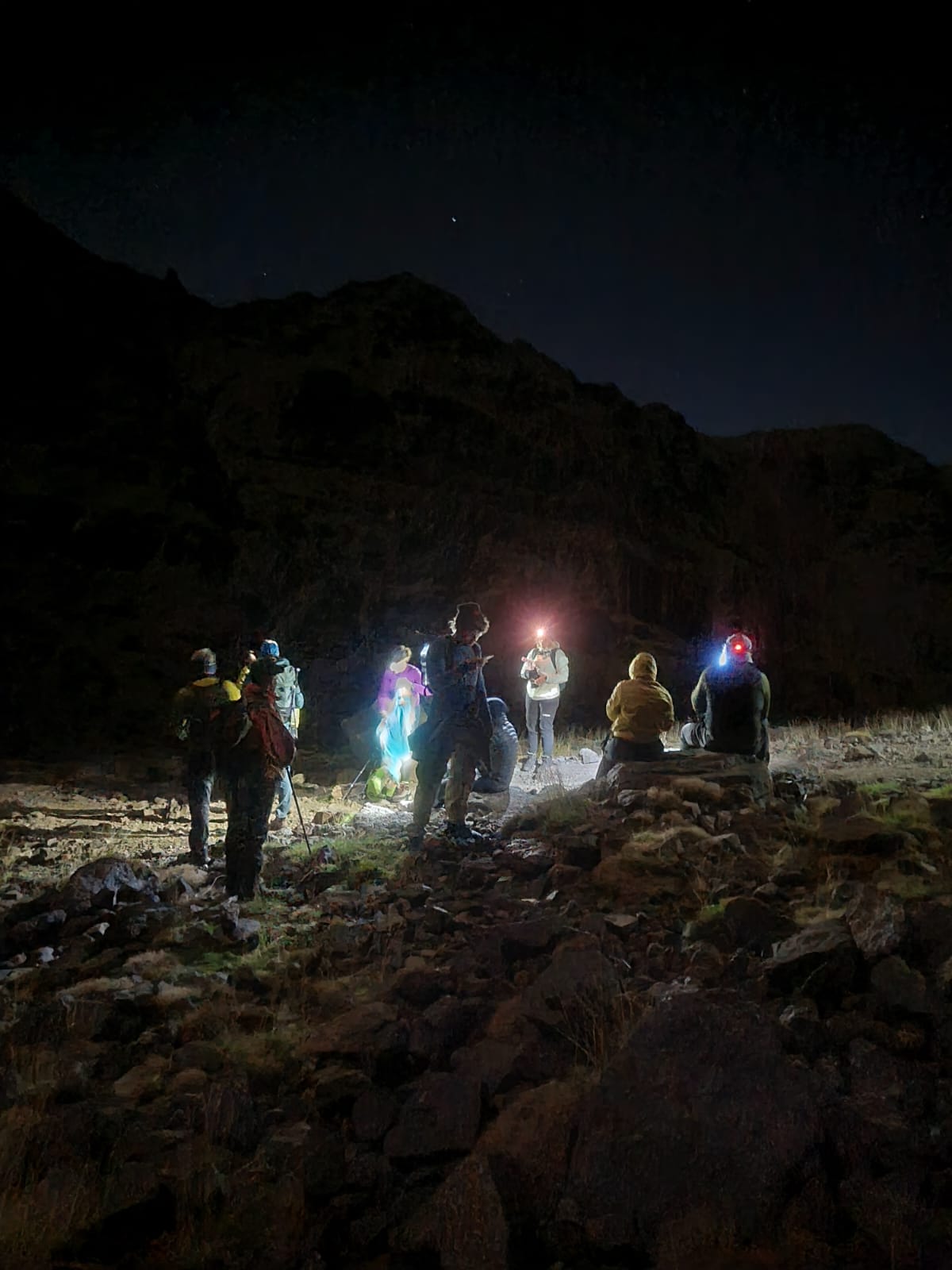
Summit day starts in the dark, often at 4 or 5 a.m., when temperatures near the refuge can be close to freezing even in August. Wind on the summit ridge makes it feel colder. Wear:
- A thermal base layer top and leggings under hiking trousers.
- A fleece, then a down jacket for the first hour and for the summit.
- A windproof shell if the forecast is breezy.
- A warm hat, gloves and a buff over the face.
As the sun rises and you warm up, remove layers gradually. Keep the down jacket at the top of your daypack for the summit stop.
What to pack for Toubkal in winter
From roughly December to March, the upper mountain is under snow and ice. Add the following to the list above:
- Crampons compatible with your boots and an ice axe (both can usually be rented in Imlil).
- Insulated winter mountaineering boots.
- Heavier gloves or mittens plus a spare pair.
- A sleeping bag rated to around −10 °C.
- Goggles for wind and spindrift.
Winter ascents are a different level of commitment; read our guide to Toubkal difficulty by season first.
What can you rent in Imlil?
Imlil, the trailhead village, has several small shops that rent and sell trekking gear. You can often find sleeping bags, trekking poles, crampons, ice axes, gaiters and sometimes jackets. Quality varies, so inspect items before taking them, and bring your own boots: rented footwear is the main cause of blisters. Prices are generally modest, but carry cash in Moroccan dirhams, as card payment is not always possible.
How to pack your bags: step by step
- Lay everything out using the table above and remove duplicates.
- Put the sleeping bag and spare clothes in a waterproof liner inside the duffel.
- Load the daypack with water, snacks, sunscreen, first aid, fleece, down jacket, shell and head torch.
- Keep valuables (passport copy, cash, phone) in a small zipped pocket you can reach easily.
- Weigh the duffel: stay within the limit your trek operator gives you so the mules are not overloaded.
Dressing respectfully in mountain villages
Your Toubkal trek passes through Amazigh villages such as Imlil and Aremd, where people are welcoming but fairly conservative. Practical trekking clothes are perfectly acceptable; simply avoid very short shorts or sleeveless tops when walking through villages and staying in guesthouses. Lightweight hiking trousers and T-shirts that cover the shoulders work for everyone and also protect you from the strong mountain sun. A light scarf or buff is handy for women who want extra coverage, for dust on the trail and for warmth in the evening. Swimwear is rarely needed, but if you plan to dip in a stream or at Lake Ifni, choose a discreet spot away from villages.
What not to bring
- Heavy cotton clothes, jeans and towels: they stay wet and cold.
- Large hard suitcases: mules cannot carry them safely. Leave them at your Marrakech hotel.
- Drones: their use in Morocco is restricted and equipment may be confiscated at customs.
- Single-use plastic bottles in large numbers: use refillable bottles and purification instead.
Health and comfort extras
Pack a small personal first-aid kit with blister plasters, painkillers, rehydration salts, anti-diarrhoea tablets and any prescription medicines. Altitude can reduce appetite, so bring snacks you enjoy: nuts, dried fruit, chocolate or energy bars. Ear plugs are useful in the refuge dormitories. If you are concerned about altitude, talk to your doctor before travelling and read the NHS guidance on altitude sickness.
Key takeaways
- Split gear between a mule-carried duffel and a 25–35 L daypack.
- Broken-in boots and a warm down jacket are non-negotiable.
- Pack for a temperature range from about 30 °C to below 0 °C.
- Winter adds crampons, an ice axe and warmer sleeping gear.
- Many items can be rented in Imlil, but bring your own boots.
Once your bag is ready, choose your route: the 4-day Toubkal trek, the 5-day valleys and Toubkal trek or the 6-day summer villages trek. Questions about gear? Ask our Imlil team. You may also like our breakdown of the Mount Toubkal trek cost.